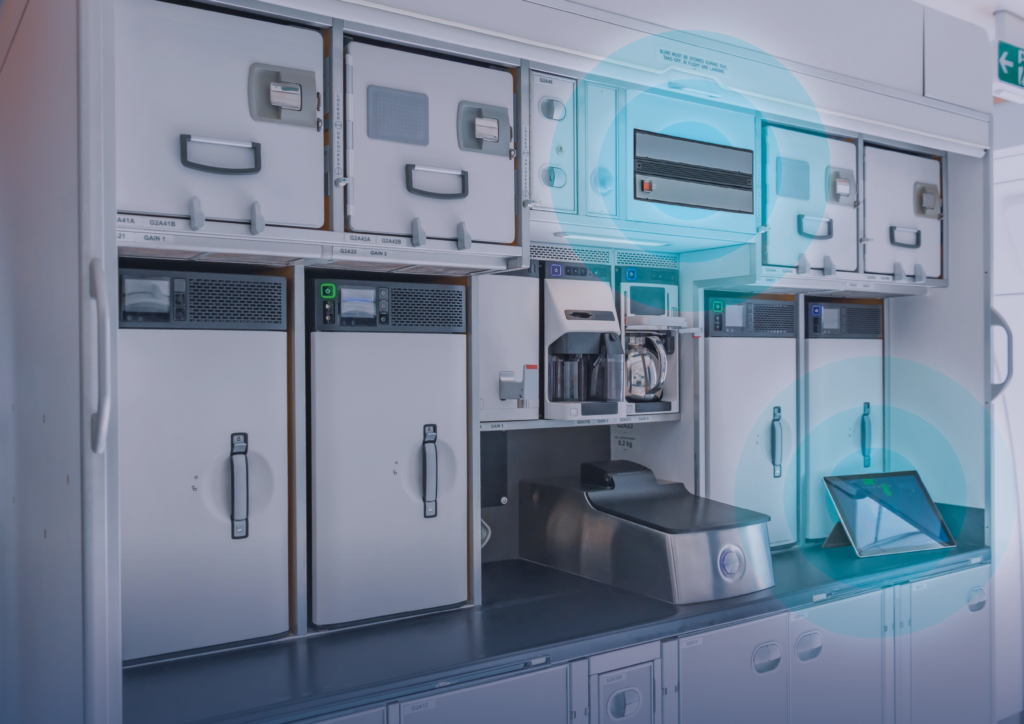
Modern aircraft cabins are becoming increasingly electrified. At the same time, many electrical systems and galleys are still designed around worst-case assumptions that rarely reflect real operation. In practice, not all galley equipment runs at full load at the same moment. Studies and operational data from secondary cabin and galley networks show that simultaneity is usually much lower. Even so, without coordinated control, unnecessary overlaps still happen. These local peaks do not improve service quality, but they do affect power reserve logic, system sizing, weight, and operational flexibility.
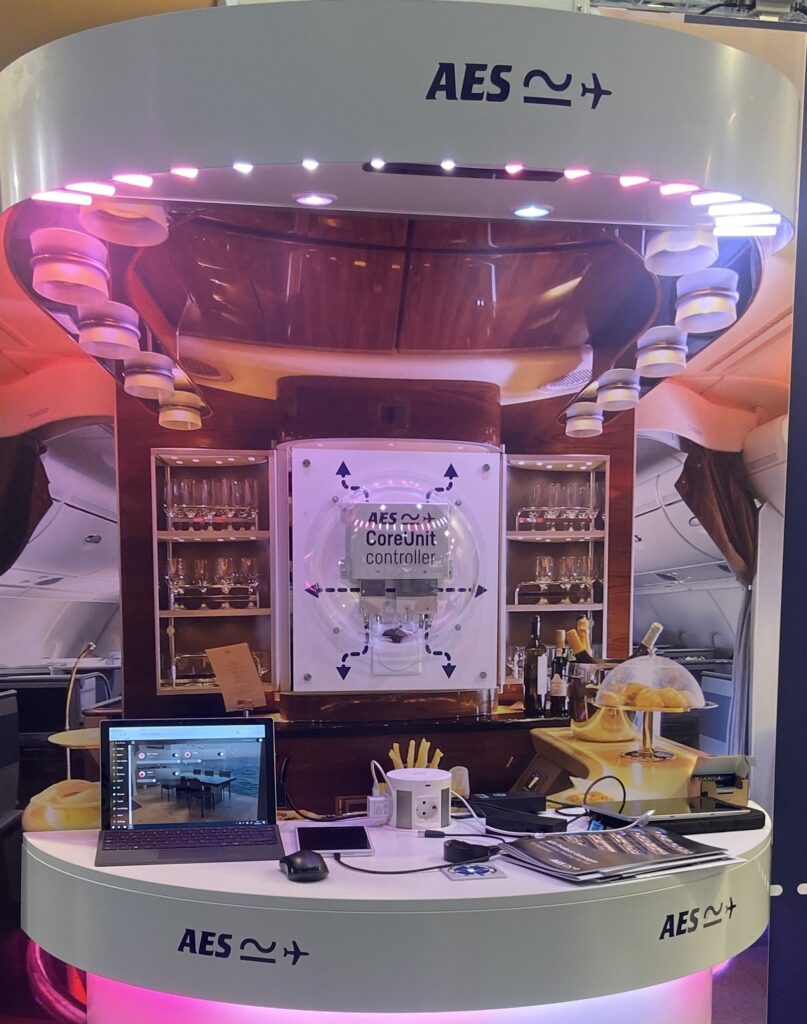
This is where the Galley Power Manager (GPM) comes in. Instead of treating the galley as a fixed electrical load, the GPM manages it as an active part of the cabin system. It captures the power demand of individual inserts such as ovens, boilers, and coffee makers, and coordinates their operation over time based on service presets, prioritization rules, and protection logic. Chillers and cooling units remain continuously powered as protected loads. The concept is designed to work in the background without changing familiar workflows for the crew. Existing controls remain in place, and manual override is always possible whenever needed.
What makes the GPM relevant is its practical approach. It takes established energy-management principles such as load prioritization, peak shaving, and coincidence-based planning, and turns them into a retrofit solution for the cabin environment. The system does not just monitor power consumption. It actively controls loads in a way that fits existing operations and supports more efficient use of available electrical capacity.
A simplified example shows the potential. A typical galley block with two ovens, a boiler, and a chiller can require around 11 to 12 kVA. Across four such blocks, the theoretical peak load can reach roughly 44 to 48 kVA if all equipment is assumed to run simultaneously at full load. The GPM approaches this differently. It treats each insert as a task with a defined energy demand and an allowable time window. An oven cycle, for example, might run for 12 minutes within a 20-minute service slot. Based on this logic, the system schedules loads so that total active demand stays below a defined limit, such as 25 kVA, while service requirements are still met. In this scenario, simultaneous galley peak load can be reduced from around 45 kVA to about 25 kVA, which is roughly a 50 percent reduction, without removing cycles or extending service times.
The benefits go beyond peak-load reduction. A more coordinated load profile means less unnecessary heating energy and better use of the reserves already available on board. It also provides a stronger data foundation for future aircraft designs, where generator and distribution capacity can be sized more precisely. As cabins continue to become more electrified, this kind of approach will be increasingly important for balancing performance, efficiency, and sustainability.
The GPM is also designed with retrofit in mind. Integration can take place step by step, starting with monitoring and analysis, moving into zone-based orchestration, and later extending to insert-level scheduling. More advanced, networked orchestration can also be added in future stages. The aim is to integrate the system without structural modifications by using modules and interfaces that fit into existing galley and feeder architectures. At the same time, the system remains transparent and fail-safe, with a clear fallback concept in place.
“Being shortlisted for the Crystal Cabin Award is an important milestone for us and underlines the relevance of smarter, more efficient and more sustainable cabin systems. We are also excited to present the Galley Power Manager to the industry at the Aircraft Interiors Expo (AIX) in Hamburg, where visitors can learn more about the concept and its potential for future cabin architectures.“